
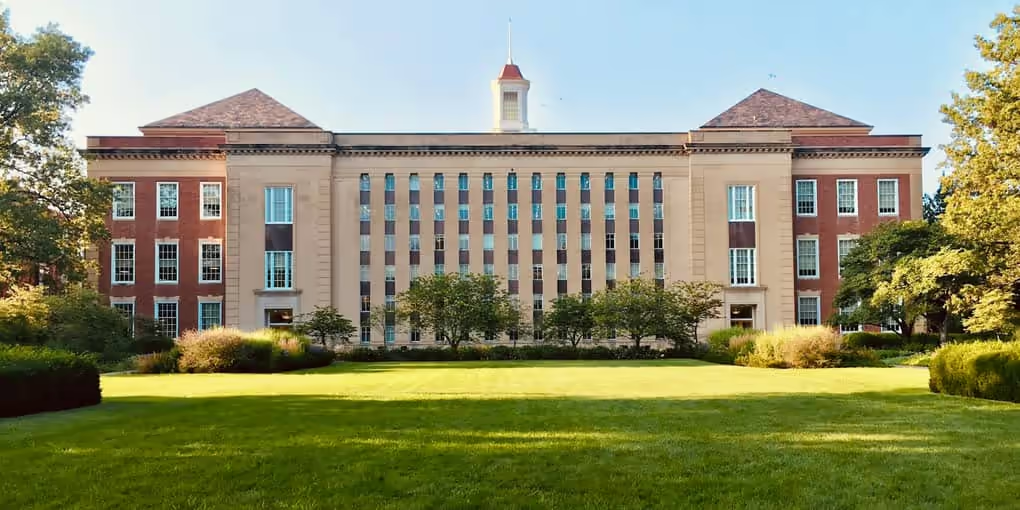
University of Worcester – University Guide for GCC and Southeast Asian Students
Overview
The University of Worcester is a smaller, supportive English university with a clear identity in health, education, sport and community-facing courses. It can appeal to families looking for manageable living, personal support and professional preparation rather than an elite research-university brand.
For families from the GCC and Southeast Asia, Worcester should be assessed as a course-and-fit decision. The best application is not necessarily the highest-ranked option; it is the one whose entry requirements, teaching model, location, cost and career plan match the student.
Key reasons to investigate include:
- Degree options in health, nursing, education, sport science, psychology, business and environmental studies
- A study base in Worcester, Worcestershire, England
- Indicative international tuition that should always be reconfirmed for the intended intake
- A UK Student Visa pathway after meeting the offer, deposit and CAS conditions
Rankings snapshot
Worcester’s overall league-table position can vary, so course accreditation, placement quality, facilities and support should lead the assessment. It is best compared with other teaching-focused universities rather than with prestige-first Russell Group choices.
Use rankings responsibly:
- Compare the exact subject, not only a university-wide number
- Read the methodology and publication year before drawing conclusions
- Consider accreditation, placement structure, facilities and graduate support
- Treat rankings as one input alongside affordability and academic fit
Popular degrees
International interest often centres on health, nursing, education, sport science, psychology, business and environmental studies. Availability, entry requirements and fee bands can change by intake, so students should open the official course page rather than rely on a general university list.
- Health and nursing — profession-facing routes with placements
- Education and teacher training — a key university strength
- Sport and exercise science — practical facilities and coaching links
- Psychology and wellbeing-related courses — confirm accreditation where relevant
- Business and environmental studies — smaller-cohort applied options
A practical course-selection check
- Read every required subject and grade condition before applying
- Confirm whether the course includes an optional or compulsory placement
- Check professional accreditation and whether it is relevant to your long-term country of work
- Ask about equipment, portfolio, lab, fieldwork or travel costs beyond tuition
Campus type and location
- Location: Worcester, Worcestershire, England
- Campus model: a compact multi-site university in a historic cathedral city
- Travel: Worcester has rail access to Birmingham and wider Midlands routes. Birmingham Airport is the most useful international gateway; London travel is possible but not a daily commute.
Location affects more than weekend plans. It determines accommodation availability, transport costs, internship access, social life and how easy it is to settle in during the first term. Students should map the course building, likely housing and nearest transport before accepting an offer.
Student demographic and culture
Worcester has a small-to-mid-sized student community. Its culture is generally friendly, supportive and less anonymous than a large metropolitan institution. International students will usually find both a UK cohort and students from other countries, but building relationships beyond one national group is important for confidence, language development and career networks.
Male to female balance
health, nursing and education commonly lean female; sport, computing and some technical areas may lean male; business and psychology are often more balanced.
Who tends to thrive
- Students who can organise deadlines, independent study and everyday living without family nearby
- Applicants who choose a course for its content and outcomes, not only its city or brand
- Learners willing to join societies, group projects and careers events in the first term
- Students who ask questions early when academic, visa or wellbeing support is needed
Accommodation
University halls are useful for first-year international students, with private rentals available later. Worcester is generally calmer and often less expensive than large UK cities, but students should still compare bills, term length and transport to the relevant campus.
Before signing, families should confirm:
- The contract length, instalment dates and whether bills are included
- Walking time or transport to the actual teaching campus
- Guarantor, deposit and cancellation requirements for international students
- Arrival date, bedding, kitchen equipment and airport-transfer arrangements
Fee structure
The figures below are planning estimates for international students and are deliberately indicative. Fees can change by academic year, course, placement status and fee classification. The official course page and offer letter are the only figures a family should use for payment decisions.
International tuition fees (indicative, 2026/27)
| Level | Typical annual tuition |
|---|---|
| Undergraduate — most standard courses | Usually around £15,000–£16,000 per year |
| Undergraduate — health, science or specialist courses | Often around £16,000–£17,000 per year |
| Postgraduate taught courses | Course-specific; placements or professional requirements can add costs |
Deposit, CAS and payment timing
Students who need a UK Student Visa normally receive a CAS only after meeting the university’s conditions and paying the required deposit. Deposit amounts, instalment options and deadlines vary. Never assume a scholarship or an agent’s informal estimate replaces written confirmation from the university.
- Accept the offer only after reviewing all conditions
- Pay the required deposit by the stated deadline
- Receive the CAS and make the Student Visa application in the permitted window
- Keep separate funds for accommodation, flights, healthcare surcharge, food and local transport
Scholarships and living costs
International scholarships may be merit-based, automatic or subject to a separate application. They can be competitive and may not cover a full year of living costs. Families should build a conservative budget that includes accommodation, meals, winter clothing, course materials, personal spending and travel home.
Budgeting safeguards for families
Build the budget in sterling, then leave room for exchange-rate movement. A tuition payment plan does not necessarily spread accommodation, visa and arrival costs in the same way, so make a month-by-month cash-flow plan before the student travels.
Include the following separately from the published tuition figure:
- University application, English test and document-translation costs
- The Student Visa application fee and immigration health surcharge
- Accommodation deposit, first rent instalment, bedding and household basics
- Flights, airport transfer, course equipment and an emergency fund
- Travel during holidays and any placement, fieldwork or studio costs
Fee verification checklist
Ask for written confirmation of the annual international fee, any scholarship deduction, deposit required for CAS, due dates, refund conditions and payment method. If the course includes an optional placement year, ask how its tuition is charged. These details can make a material difference to the total family commitment.
Admission procedure
Applicants need recognised school credentials, English language evidence and course- specific subjects. Nursing, education and health routes may require interviews, safeguarding documents, health screening or relevant experience.
Undergraduate route
- Choose the course and check the current entry profile, fee and intake
- Apply through UCAS or the official route specified by the university
- Submit transcripts, certificates, passport details, personal statement and references where requested
- Provide accepted English-language evidence if required
- Meet offer conditions, arrange funding, obtain a CAS and apply for the Student Visa
Postgraduate route
Taught postgraduate applications are commonly made directly through the university. Applicants usually need a relevant bachelor’s degree, academic transcript, personal statement, English evidence and one or more references. Some courses ask for a CV, portfolio, interview or relevant professional experience.
Typical documents checklist
- Academic transcripts and qualification certificates
- Passport copy and current contact information
- Personal statement explaining course fit and goals
- Reference letters where requested
- English-language test result if required
- Portfolio, CV, interview preparation or professional documentation for selected courses
Timing for a September start
Start research at least a year ahead where possible. UCAS equal-consideration dates, competitive-course deadlines, scholarship rounds, English testing and visa processing each have their own timetable. A late application can still be possible, but it reduces choice and adds pressure.
Keep scanned copies of every document and record the exact name used on qualifications and passport. Differences in spelling, dates or untranslated certificates can delay an otherwise straightforward application.
Academic intensity and social life
Students can expect approachable teaching but genuine professional standards. Health and education programmes carry placement attendance and conduct responsibilities; sport students need practical engagement as well as science-based academic work.
Social life works best when students create a realistic rhythm: scheduled study, shared meals, exercise, societies and time to explore the city or region. International students should not feel pressure to copy every social habit they see; a sustainable routine is more valuable than an overfull first term.
Making the first year work
The most successful international students treat the first term as an adjustment period rather than a test of whether they belong. Reading lists, assessment language, referencing conventions and seminar discussion can feel unfamiliar even to academically strong students. Asking a lecturer, personal tutor or learning-development adviser for clarification early is a sensible academic habit.
A workable weekly routine should include protected study blocks, time to review lecture notes, ordinary household tasks and deliberate rest. Students who keep a simple calendar of submission dates, visa documents, rent payments and travel plans usually avoid the avoidable pressure that can build near assessment deadlines.
Questions for the course team
Before accepting an offer, ask the course team or admissions office:
- How many contact hours are typical in first year, and how much independent study is expected?
- Which assessments are examinations, coursework, group projects, presentations or practical work?
- Is a placement optional, competitive, compulsory or separately assessed?
- What software, equipment, books, fieldwork or professional checks will the student need to fund?
- Who provides academic, disability, wellbeing and international-student support?
Staying connected without losing independence
Regular family contact is valuable, particularly during the first winter and examination period. At the same time, students need room to build local friendships, solve everyday problems and make academic decisions. Agreeing a practical communication rhythm before departure can support both wellbeing and independence.
Sports, societies
Sport is a visible part of Worcester’s profile, alongside societies, volunteering and a compact city social scene. The environment suits students who like community involvement and prefer a quieter base to a major-city lifestyle.
- Join one course-related society and one interest, cultural, faith or sport group
- Use induction events to learn where student support and careers teams are based
- Participate in volunteering, competitions or project showcases where relevant
- Maintain a healthy routine during winter and assessment periods
Careers
Worcester’s strongest career routes connect to health, teaching, sport and local professional networks. Verify whether qualifications transfer to the country where you plan to work, and use placements to gain demonstrable experience and references.
A strong employability plan
- Start a CV and LinkedIn profile in first year
- Track projects, grades, responsibilities and feedback for future applications
- Apply early for placements and internships; deadlines can be many months ahead
- Practise interviews and assessment-centre skills before final year
- Check post-study visa rules and professional licensing requirements from official sources
Career planning from first year
A UK degree is strongest when students can explain what they learned, show how they applied it and describe the evidence behind their claims. Keep copies of excellent assignments where permitted, record project roles and outcomes, and ask supervisors for feedback while the work is fresh.
International students should read job advertisements early, even before they are ready to apply. This reveals whether employers ask for particular technical tools, professional memberships, visa eligibility, language skills or work experience. It also makes final-year applications less surprising.
Placements, internships and part-time work
A placement can be highly valuable, but its benefits are not automatic. Check whether the course helps students find opportunities, whether the year changes fee arrangements, and whether visa conditions affect the proposed work. Start applications early because popular programmes often recruit during the first term.
Part-time work can provide confidence and income, but it should never undermine attendance, assessment quality or visa compliance. Student Visa work conditions must be checked on the visa itself and through official university guidance; do not rely on informal advice from social media.
Returning home or working internationally
Families should discuss the likely post-graduation destination before the final year. A UK employer may value local placements and networking, while an employer in the Gulf or Southeast Asia may look closely at the university name, subject relevance, internship record and professional accreditation. The strongest plan develops evidence for both possibilities.
Who should shortlist University of Worcester?
Consider shortlisting this university if you:
- want health, education, sport or a support-led university experience
- prefer a smaller English city and community feel
- are prepared for the placement and compliance demands of professional degrees
- prioritise course fit and accreditation over global ranking prestige
Consider other options first if you:
- Need a different campus model, city size or specialist subject
- Require an elite prestige signal as the primary decision criterion
- Cannot comfortably meet the full tuition and living-cost budget
- Would struggle with the course’s academic, portfolio, technical or placement expectations
A final parent checklist
Before committing, confirm the course, campus, total annual budget, accommodation plan and visa timeline in writing. A clear plan makes the transition far smoother for both student and family.
How Tutopiya helps
Tutopiya supports students applying to University of Worcester and other UK universities with an honest, joined-up plan for academic preparation, course choice and applications.
- Strengthening IGCSE and International A-Level performance in subjects that matter for entry
- Building realistic shortlists using grades, budget, course fit, location and career goals
- Preparing personal statements, English-language goals, admissions tests and interviews where relevant
- Helping families understand offers, fees, scholarship timing, deposits, CAS requirements and Student Visa planning
- Providing university counselling that compares options honestly rather than treating every university as interchangeable
- Issuing reference letters for tutoring and homeschooling students where Tutopiya has supported the student’s academic programme — useful when school references are limited or unavailable
- Connecting students with unpaid internship opportunities and work-experience options where available, to strengthen personal statements, portfolios and future CVs
If you’d like tailored advice, talk to Tutopiya’s team about a plan that connects exam preparation with university admissions.
Ready to Excel in Your Studies?
Get personalised help from Tutopiya's expert tutors. Whether it's IGCSE, IB, A-Levels, or any other curriculum — we match you with the perfect tutor and your first session is free.
Book Your Free TrialWritten by
Tutopiya Team
Related Articles

Adelaide University – University Guide for GCC and Southeast Asian Students
Detailed guidance for international students from the Gulf and Southeast Asia considering Adelaide University, including fees, admissions, popular degrees, multi-campus Adelaide life, accommodation and graduate outcomes.

Australian Catholic University – University Guide for GCC and Southeast Asian Students
Detailed guidance for international students from the Gulf and Southeast Asia considering Australian Catholic University (ACU), including fees, admissions, popular degrees, multi-campus life across Sydney, Melbourne, Brisbane and Canberra, accommodation and graduate outcomes.

Australian National University – University Guide for GCC and Southeast Asian Students
Detailed guidance for international students from the Gulf and Southeast Asia considering the Australian National University (ANU), including fees, admissions, popular degrees, Canberra campus life, accommodation and graduate outcomes.